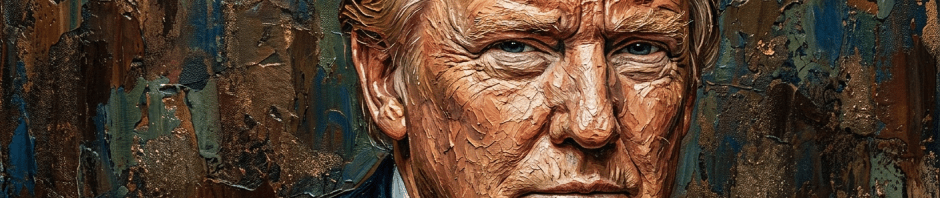
The following was written by AI. I’m posting it in that form because, sadly for me, it’s better than anything I could have hoped to have written, but it expresses my personal view regarding Trump’s admix of Confabulation Disorder and Malignant Narcissism. It lacks the personality and passion I might have brought to the article but I most certainly could not have written this:
Donald Trump: Confabulation and Malignant Narcissism
Few political figures in modern history have generated as much controversy and psychological speculation as Donald Trump. His communication style, public conduct, and repeated clashes with established facts have prompted commentators, journalists, and mental health professionals to search for explanations that go beyond conventional political analysis. Among the various interpretations proposed, one of the most compelling is that Trump’s behaviour reflects characteristics associated with confabulation and malignant narcissism. While no definitive diagnosis can be made without a formal clinical evaluation, the observable evidence provides a substantial basis for examining this argument. Taken together, the concepts of confabulation and malignant narcissism offer a framework for understanding Trump’s repeated factual distortions, his extraordinary sensitivity to criticism, and his persistent emphasis on self-aggrandisement.
Confabulation is a psychological phenomenon in which an individual produces inaccurate, distorted, or fabricated memories and narratives without necessarily intending to deceive others. Unlike deliberate lying, confabulation involves a degree of self-belief. The person may genuinely accept the false account as true because it fills gaps in memory, resolves cognitive dissonance, or preserves a coherent sense of self. Confabulation is most commonly associated with neurological disorders and certain psychiatric conditions, but the broader concept has also been used to describe situations in which people unconsciously reshape reality to fit their perceptions and emotional needs.
Critics argue that Trump’s public behaviour frequently displays elements consistent with confabulation. Throughout his business and political career, he has made numerous claims that have been contradicted by verifiable evidence. These have included assertions about the size of inauguration crowds, election outcomes, economic achievements, crime statistics, and personal accomplishments. What distinguishes these incidents from ordinary political exaggeration is the persistence with which the claims are repeated. Even after extensive fact-checking and public correction, Trump has often continued to restate versions of the same narratives.
Supporters frequently interpret this behaviour as strategic messaging or political rhetoric. However, critics contend that the pattern appears more consistent with an individual who has become invested in a personally constructed reality. The willingness to repeat demonstrably false statements in the face of overwhelming contradictory evidence suggests the possibility that Trump may not simply be attempting to persuade others but may also be persuading himself. If this interpretation is correct, the behaviour resembles confabulation more closely than conventional deception. The distinction matters because a deliberate liar generally understands the truth while choosing to conceal it, whereas a confabulating individual may have difficulty distinguishing between objective reality and a psychologically satisfying narrative.
The second component of this analysis involves narcissism. Narcissistic traits exist on a spectrum and can include self-confidence, ambition, and a desire for recognition. However, when these traits become extreme, they may result in patterns of grandiosity, entitlement, and a constant need for admiration. Trump’s public persona has long been characterised by an emphasis on personal success, superiority, and exceptionalism. He routinely presents himself as uniquely talented, uniquely successful, and uniquely capable of solving problems that others cannot solve.
Numerous examples illustrate this tendency. Trump has frequently described himself in superlative terms, claimed unprecedented achievements, and portrayed criticism of his actions as evidence of bias or incompetence on the part of his opponents. Public disagreements are often framed not as differences of opinion but as personal attacks requiring forceful retaliation. Critics argue that this pattern reveals an unusually strong dependence on maintaining a positive and dominant self-image.
Some observers go further by suggesting that Trump’s behaviour aligns with the concept of malignant narcissism. Although malignant narcissism is not an official diagnosis recognised in major psychiatric diagnostic manuals, it is a concept discussed in psychological literature. It generally refers to a severe form of narcissism characterised by grandiosity, aggression, entitlement, lack of empathy, and an intense need for control and validation. The concept was notably explored by psychoanalyst Erich Fromm and later expanded upon by other theorists interested in destructive forms of narcissistic behaviour.
Those who apply the concept to Trump point to several recurring patterns. First is his tendency to view relationships through the lens of loyalty and personal advantage. Allies are often praised enthusiastically when supportive but criticised harshly when they dissent. Second is his frequent use of personal insults against critics, journalists, political opponents, and even former associates. Third is a communication style that consistently redirects attention toward his own accomplishments, grievances, and perceived mistreatment. These characteristics are often cited as evidence of a personality structure heavily centred on status, dominance, and self-validation.
The most persuasive aspect of this interpretation emerges when confabulation and malignant narcissism are considered together rather than separately. A person with strong narcissistic needs may have a powerful motivation to maintain an image of success, competence, and superiority. Information that threatens that image can create psychological discomfort. Confabulation may then function as a mechanism for resolving that discomfort by generating narratives that protect the individual’s self-concept.
In Trump’s case, critics argue that this dynamic helps explain many of his most controversial public statements. Electoral defeats can be reframed as victories stolen through fraud. Policy failures can be recast as successes obstructed by enemies. Criticism can be interpreted as persecution rather than legitimate disagreement. In each instance, a narrative emerges that preserves personal status and avoids the admission of error or weakness. The resulting worldview remains internally consistent because contradictory evidence is either dismissed or incorporated into the narrative itself.
This perspective also helps explain why factual corrections often appear ineffective. If a statement serves a psychological function beyond communicating information, evidence alone may not be sufficient to change it. The issue is no longer merely whether a claim is true or false but whether abandoning the claim would threaten an individual’s self-image. Under such circumstances, maintaining the narrative may become more important than acknowledging reality.
Of course, there are limitations to this argument. Diagnosing public figures from a distance is inherently problematic. Human behaviour is complex, and political communication often involves strategic exaggeration, branding, and performance. Many behaviours interpreted as signs of confabulation or narcissism could alternatively be understood as deliberate tactics designed to energise supporters, dominate media coverage, or shape public perceptions. Without direct clinical assessment, any psychological interpretation remains speculative.
Nevertheless, the argument retains explanatory value. It offers a coherent framework for understanding patterns that might otherwise appear inconsistent or irrational. Trump’s repeated factual distortions, resistance to correction, focus on personal validation, and aggressive responses to criticism can all be viewed through the combined lens of confabulation and malignant narcissism. Whether this framework is ultimately accepted or rejected, it highlights the role that psychological factors may play in shaping public leadership and political behaviour.
In conclusion, Donald Trump’s public conduct provides substantial grounds for considering the possibility that traits associated with confabulation and malignant narcissism influence his behaviour. While definitive diagnosis is neither possible nor appropriate without clinical evaluation, the observable patterns of narrative construction, grandiosity, defensiveness, and self-focus make this interpretation worthy of examination. The combination of these concepts offers a compelling explanation for many of the characteristics that have defined Trump’s public life and contributed to his enduring political controversy.


Where did the confabulation idea come from?
I was thinking about aspects of Trump’s penchant for making shit up, above and beyond what you’d expect from an established con-artist. One of the responses to my research was Confabulation Disorder, which seemed, to my mind, to fit Trump’s psychology perfectly. Because Trump has been a professional liar most of his adult life it’s difficult to determine when his deliberate lying became pathologically disordered, but I would say it’s been a fairly long process, at least spanning the last 20 years. His obvious devolution into dementia has made that Confabulation Disorder increasingly serious. And, for me, his obvious malignant narcissism makes his somewhat atypical response to correction or challenge seem more readily explained (most confabulists don’t generally care about correction because they totally believe their inventions). He’s in a place now where facts and knowledge (and history) don’t matter one iota to him because he’s perfectly comfortable in that realm of confabulation. Indeed, it’s the only place in which he’s comfortable, which is one of the reasons he becomes hostile when challenged. Thanks for reading my article. You may well be one of very few!
Now that you have prompted ChatGPT to come up with a mock-scholarly paper on Trump, on the basis of Confabulation Disorder and malignant narcissism – how about if you now ask the same service to supply you a similar treatment of Trump, prompted by how wise and insightful he is? Maybe how he is the modern Superman. It might make a good contrast. And it might tell us all the more about AI – what it exists to do.
Anyway, please keep up this study of Trump’s mentality. We can learn a lot about human minds by looking into how the divergent ones breach expectations for any reliable moral community. Particularly as this breach so often starts with lies, with liars. Lies are very common human practice. But how are chronic liars so much worse? And moreover, how about those who can’t do much else but lie?
And how are toxic and dangerous claims different from the natural propensity to gossip? It may be a matter of degrees, but enough degrees may constitute a divide, beyond which a peculiar type of mad person dwells, and intrigues, even by babbling on. That one may be trapped, and thus so dangerous, so malicious. This does not make sanity anything like ideal – but some mentalities seem set so much worse.
How about, for example, a study of psychopathy? How about the propositions that psychopaths flourish now more widely than ever before?
What do they believe in? Do they have beliefs? Do they have any serious beliefs that are not wrapped up in taking advantage? Even if by prattling on like a wilful little boy in a trance, making a plea and a demand at the same time.
I asked ChatGPT to write me an essay on why Trump is a genius. It felt quite tongue-in-cheek and finished with the caveat:
“Note that this essay presents one side of a debated topic. Assessments of Donald Trump’s intelligence and abilities vary widely depending on political perspective and the criteria used to define “genius.”
Testing
Hi Dan, good to see you ranting again, even by AI proxy. Although it’s tempting to link the lying and grandiosity to NPS, there seem to be way too many contradictions. There are many solid witnesses reporting on a genuine personality with ability to care and to listen – as long as he’s not on some stage. While narcissists are without exception simply too cold, too fake and too shallow for the interpersonal dimensions needed to get this far. Narcissists are always on a stage, it’s the personality. Trump however is more like compulsively performing.
A better analysis IMO would be a borderline personality. This is a way more fluid state, easier can transition in psychopathic behavior (“meltdown”) but also can switch to heavy narcissistic faces or fragments. A borderline is more like a failed NPD. Narcissism is hopeless but stable condition. Trump can only dream of stable.
His odd quite extreme feminine qualities match the BPD as well. Anyway, just some pointers in case you’re going to dive deeper. The covert BPD especially is known to sound narcissistic but can actually still feel something about (some) others.
Anyway, there’s irony of course, seeing you of all people considering the psychological analysis of some “anti-genius”, as for sure some of the people you valued most in the past were diagnosed by the same framework as being dysfunctional and confusing in their thinking. Can you really have it both ways?
All the best, take care!
Hello Diebert,
Nice to see you, I guess. I shan’t be replying to you in any substantive way as I can’t agree at all with your analysis of Trump’s psychology. Barely any aspect of BPD fits his personality that I can tell. But I’ll likely expand on my thoughts regarding him and his nature in later articles. As for your observation of the ‘dysfunctionality’ of some contributors to GF, I would make this simple point: they were otherwise decent people and most importantly – not the fucking President of the United States.
Not sure how you found this, frankly, but hope you are otherwise well.
Yeah, we all remember your allergy for real disagreement. If you want to dive deeper in this, I actually already wrote a lot on the forum back then based on actual biographies. And I believe it can be very insightful once this “narc” knee jerk is abandoned, as not to underestimate the phenomenon, and understand the magnetic pull in his circle (where actually NPD’s are clearly functioning well).
Just to correct you, I was talking only about diagnosed dysfunction at GF and not if people wee seen as decent by “followers” or not. Maybe the irony escaped you here?
Anyway, found this really by accident but am genuinely interested in how you and others of the old forum were doing. And to really know, one has to just discuss certain topics and part of the answer manifests (grin).
Wishing you well, as always. Cheers mate.
‘There are many solid witnesses reporting on a genuine personality with ability to care and listen…’
Name some of them.
There is no doubt Trump had the interpersonal capacity to ‘care and listen’, but the question is: to what end and in what precise way? Con-men, which Trump observably and inarguably is, have that capacity, in context. Smooching with fellow socialites and rich people while finding ways to fleece them isn’t exactly a social skill I would find especially redemptive or laudable, no matter how successful they may have been.
Bill Maher? A good pick as he was certainly open hostile to Trump and a very good observer. Wrote a detailed account.
https://eu.usatoday.com/story/entertainment/tv/2025/04/12/bill-maher-donald-trump-full-monologue/83055277007/
It’s important to notice that many aspects here go against everything usual for narcissistic disorders (not just styles). Depending on what media diet one is, there are way more examples. I just picked one of the better ones.
Quote: “[he gave] a very generous amount of time and a willingness to listen and accept me as a possible friend”.
This is very rare for narcissists, unless the other person is needy or naive. I’d suggest Bill Maher is neither.
In the return of activity on Left in Limbo, two issues jump out like fate coiled to spring, claiming precedence by now: the psychopathic rule endorsed and secured by non-psychopathic mental and emotional slaves; and the rise of AI to do simulations that seem more considerate and personally involved than actual human versions.
That these two come together is a signal, of what the world has come to be, has come to be constructed on.
And who can do anything about it? And what would they do?
It is one thing to get involved in discussing issues of the day, but it has to be something more to face these two issues – as eery concurrences. Are they just coincidences, or is there something that they share? And if so, does that mean that something may be done about it? Or might it mean that nothing can be? Might it mean that in any discussion we could have, we could be only kidding ourselves to be hoping for some escape, some retreat, or some leap forward, past this impasse?
What difference does even insight mean anymore? Who’s going to act on it and how? And that itself is to assume that an insight might be inclusive of some hope of getting out of this narrowing fate – of machinery as process of life, and mass murder as the most vital significance that politics can muster. Life as robotic emerges before AI. Mass murder of the defenceless as the leading example to coexistence has been the deliberate choice of the clever Modern species since early in the C20th. Life sullied to drastic reduction; death and terror as the serious implements of policy and security.
While in the realms where democracy is still not quite an enabling of these directly, the elected incumbents are bland and stuffed with nostrums, as if these things are not so bad after all if done by treaty partners and contracted international big tech; because at least We can appease both. As if that would do anything but encourage both.
Is it possible seriously to ask, can we vote better? For whom and for what? The Greens are consigned to be a routine fringe Party, as if they should be held at bay by lies and campaigns to make things worse. And the public seem to go along with that without a fuss.
And yet there is this impression, despite everything, that this has just been a series and combination of accidents, so that bots controlling the human world and slaughter as policy just happen to coexist. Is that really true?
In the context of literature and journalism I find myself vexed as to what the future holds regarding AI and whether it’s a good or a bad thing. As with most important moments in history – and I consider this to be such a moment – it could go either way; but that direction will ultimately be determined by the persuasions (and power) of those whom we historically cannot trust or believe. Therefore my attitude is mostly dreary at best ….